
The Obvious Three: Grease, Solids, And Wipes
Grease leads the list because it commits its damage slowly and then all at once.
Hot fryer oil and wash water carry fat down the line in liquid form, and the fat plates out on the cooler pipe walls downstream, layer on layer, until the opening is a fraction of the pipe.
Nothing that leaves a fryer, a grill line or a saute station in liquid form belongs in the drain; it belongs in the oil container, cooled and handled the way your used-oil pickup expects.
Food solids are the second: plate scrapings, prep trim, the contents of a bus tub rinsed into the sink. Every solid the line carries is a solid the flow must push, and in any flat or slow stretch it simply stops and stays.
Wipes are the third, and the rule has no exceptions: products marketed as flushable do not break down the way toilet paper does, and in a commercial line they raft together at joints and become the skeleton that grease builds on.
Starches earn their own warning because they behave politely at first. Rice, pasta, and potato waste go down as soft scraps, then absorb water in the line and swell into a paste that coats the pipe and hardens as it cools.
Coffee grounds do the opposite trick: they never dissolve at all, settling into low spots as a dense sediment that other waste sticks to. Both look harmless in a sink. Both are slow-motion blockages.
The Quiet Destroyers
Harsh chemical openers and aggressive degreasers do their damage by relocation. A strong chemical can melt the near end of a grease plug into a slurry that travels twenty feet and re-hardens in a colder stretch, converting a maintenance item into a blockage at a worse address.
Used habitually, they are also rough on older pipe and on the people who later service the line the chemicals are sitting in.
Coffee grounds and gritty mop water are the quiet entries. Grounds do not dissolve; they settle in every low spot and add their weight to the coating's growth.
Mop water carries the floor's grit and debris load straight into the floor drain, which is why it should be strained or settled rather than dumped at full load. None of these habits looks like sabotage. Each one is a small deposit in an account the line collects on later.
Where It Should Go Instead
The alternatives are unglamorous and entirely workable. Plates and prep waste get scraped into the trash or the organics bin before they meet water.
Sink and floor-drain strainers catch the solids that washing inevitably frees, and they get emptied into the trash as part of the closing routine, not left to dissolve into the line they are protecting.
Used oil lives in its container from fryer to pickup, never meeting a drain at any temperature.
For the mop sink and floor drains, a strainer basket and a few seconds of settling turn the dirtiest water in the building into something the line can carry.
The pattern underneath all of it: the drain is for water, with whatever truly dissolves in it, and everything else has a bin, a container or a strainer with its name on it. A line fed that diet narrows at the pace of its pipe's age, not its kitchen's habits.
The lasting fix is embarrassingly simple: ten minutes with the crew, at the start of a pattern, covering what goes in the mop bucket, where the oil caddy lives, and what the strainer baskets are for.
New staff copy what they see on their first shifts, so the habit has to be visible to survive. Kitchens that post the short list at the dish pit keep the habit alive; kitchens that rely on one manager's memory lose it with the next hire.
Making It Stick With Staff
Rules about drains fail the way most kitchen rules fail: they are announced once, to whoever was on shift, and never made visible again.
What works is smaller and dumber: a short list posted at the dish pit and the mop sink, strainers that are actually present and intact, and the closing checklist carrying the strainer emptying as a named step rather than a hope.
Fold the why into the training minute. Staff who have seen a photograph of a grease-coated line, or stood in a dining room closed by a backup, treat the strainer differently from staff who were simply told.
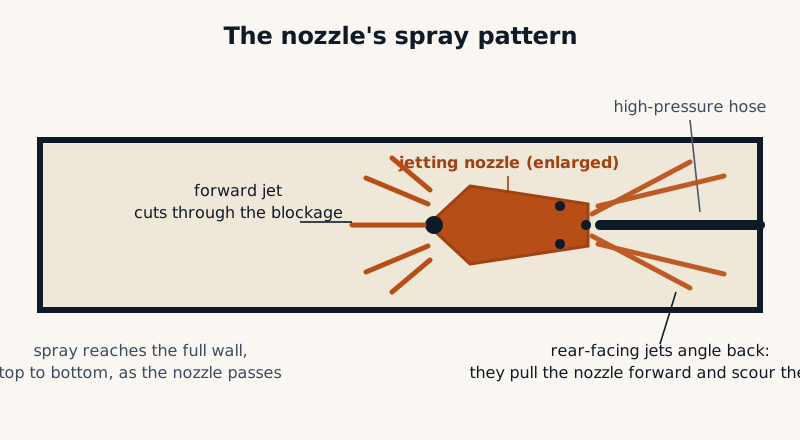
And when the rules hold, the property's commercial drain maintenance program becomes what it should be: a scheduled jetting on an interval, boring by design, instead of a recurring rescue with the whole staff watching.
Habits set the ceiling; the interval does the rest. For how the servicing rhythm itself is chosen, read grease lines keep a rhythm: maintenance intervals for food-service drains.