A waterproof camera travels your sewer line so you see the clog, the cracks and the roots yourself before deciding on any fix. Call (941) 344-0204 to talk it through with a local drain professional.
What Sewer Camera Inspection Is
A sewer camera inspection sends a small waterproof camera on a push cable through your drain or sewer line, transmitting a live picture of the pipe's interior to a screen at the surface.
It turns guesswork into evidence: instead of being told your line has roots or a crack, you watch the roots and the crack, at a measured distance from the cleanout, and every repair decision afterward rests on something you have seen.
If you are deciding between sewer camera inspection and a bigger fix, the overview of hydro jetting in Bradenton, FL explains how cleaning, inspection and repair fit together, and the sections below cover sewer camera inspection in the depth you need before you call.
How The Work Is Done
01
The Camera Run Itself
The pro inserts the camera through a cleanout, a removed fixture or another access point and feeds it through the line while watching the monitor.
The head carries its own lighting and a distance counter, so every finding is logged by footage: grease coating at twelve feet, root mass at the joint at thirty-one, a belly holding water at forty.
On a full inspection the camera travels from the house to the city connection at the street, or as far as conditions allow.
02
Locating From Above Ground
The camera head contains a transmitter (a sonde). With a locator wand at the surface, the pro pinpoints the camera's position and depth at any moment.
That is how a finding inside the pipe becomes a mark on your lawn: the crack the camera sees at forty feet is the same spot the locator marks above it. For any repair or trenchless plan, those marks are the map the work is priced from.
03
A Record You Keep
Inspections are recorded. You should receive the footage or a link to it, along with a plain summary of what was found and where.
That record has value beyond the day: it supports a future repair quote, answers a buyer's questions if you sell the home, and gives the next pro a baseline to compare against instead of starting over.
Signs You May Need This Service
The clearest signals that sewer camera inspection belongs on your list:
Your drains clog repeatedly and nobody has explained why
You are told you need a repair or replacement and want to see the evidence
You are buying an older Bradenton home and the sewer line's age is unknown
A seasonal home is being opened and its drains have sat unused for months
Roots are suspected but their location and severity are not
A backup happened once and you want to know if it was a warning
You are planning a renovation that adds bathrooms or a laundry
A previous repair needs verification before a warranty conversation
Any single sign on this list justifies the camera on its own. Together they describe the normal state of an aging line that nobody has ever actually looked inside, which is most of the lines in the older half of this city.
Why This Problem Happens
Inspections exist because underground pipes fail silently. Above ground, a homeowner sees only symptoms: slow drains, a backup, a smell.
The same three symptoms can come from a grease plug worth a cleaning, a root mass worth jetting, or a collapsed section worth excavating, and the prices of those answers differ enormously. The camera is what separates them.
In Bradenton it is especially valuable because so much of the housing stock is at the age where cast iron and clay lines begin to fail, and nobody can date a buried pipe's condition from the surface.
Bradenton may be the ideal Florida city for camera inspections, because so much of its value sits in older homes whose buried lines are complete unknowns.
The pre-purchase inspection on a 1960s ranch in Bayshore Gardens or a bungalow near downtown turns the largest hidden liability of the house into twenty minutes of footage.
Seasonal owners use the same tool differently: a scope at arrival, after the house has sat closed through the wet months, converts whatever the summer did to the line from a surprise into a schedule.
In both cases the camera pays for itself in decisions made calmly instead of during a backup.
Safe Checks You Can Do First
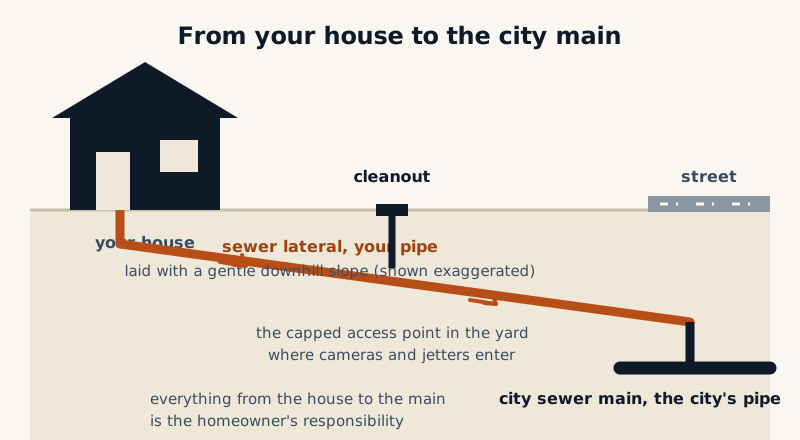
Before the visit, you can help the inspection succeed. Find your cleanout if you know where it is, typically a capped pipe in the yard near the house or by the street, and make sure it is reachable. Clear a path to it.
If water is standing in the line from a full blockage, tell the pro when you book: a camera sees poorly through standing sewage, and the line may need a clearing pass first, which changes how the visit is sequenced.
Note the symptoms by fixture and date; matching the footage to the symptoms is how the findings get interpreted correctly.
What The Professional Visit Looks Like
The pro arrives, confirms access, and runs the camera while narrating what the screen shows. Expect to be invited to watch; a good inspector wants you looking at the same picture.
Findings are measured and marked, and the visit ends with a summary in plain language: what is clean, what is building up, what is damaged, and what each finding argues for, from nothing at all, to cleaning, to a scoped repair.
If the line is healthy, that is the finding, and the visit was still money well spent the next time a symptom appears.
What Affects The Cost
Inspection pricing follows the work of getting the camera through your specific line. The factors are:
Factor
How It Affects The Job
Access route
An open cleanout is quickest; pulling a toilet or using a roof vent adds setup time.
Line length
A short ranch lateral scopes faster than a long line with multiple turns.
Line condition
A blocked, water-filled line may need clearing before the camera can see.
Recording and report
A recorded inspection with measured, located findings is the full service; ask if it is included.
Combined work
An inspection bundled with the cleaning or repair it diagnoses is usually sequenced as one visit.
Confirm the recording and the written summary are included before the visit. Footage you keep is the difference between an inspection and an opinion.
When To Call Promptly
Do Not Wait If
An inspection itself is diagnostic, not emergency work. But if sewage is backing into the home now, say so when you call: the visit gets triaged as a <a href="/emergency-drain-cleaning/">drain emergency</a> first, the line gets cleared and made safe, and the camera documents the cause once the water is gone.
Frequently Asked Questions
Can The Camera Go Through My Whole Sewer Line?
In most homes, yes, from the cleanout to the street connection. Tight turns, heavy buildup or a fully blocked section can stop the camera partway, and the pro will tell you how far it traveled and what that partial view still establishes.
Access from a second point often completes the run.
Do I Get To Keep The Video?
You should. Ask when booking whether the recording and a written summary are included. The footage belongs with your home records; it is the baseline every future quote and inspection compares against.
What If The Camera Finds Nothing Wrong?
That is a real and useful result: it rules out structural failure and points at usage or venting causes for intermittent symptoms. Many homeowners order an inspection precisely to hear that the line under a house they are buying is sound.
Can An Inspection Find Where My Line Runs?
Yes. With the locator, the pro can trace the line's path and depth across your yard and mark it. That map matters for repairs, for landscaping and digging projects, and for answering where the line passes relative to trees and structures.
Should I Get An Inspection Before Buying A House?
On an older Bradenton home, it is one of the highest-value checks available. The sewer lateral is the homeowner's responsibility, failures are expensive, and no surface inspection can see it. A scoped line with recorded footage removes the biggest unknown under the house.
My Line Just Backed Up. Camera First Or Cleaning First?
If sewage is standing in the line, cleaning comes first because the camera cannot see through it. Once flow is restored, the camera run shows what caused the backup while the evidence is fresh. The pros sequence it for you; just describe the situation when you call.
Related Guides
From our Bradenton drain guides, the homeowner side of sewer camera inspection, in plain language:
A sewer camera finds roots, cracks, bellies and grease, measured by the foot. It cannot measure wall thickness or see through standing water. An honest account of the tool's eyes and its blind spots.
A standard home inspection covers everything visible. The sewer lateral is invisible, owner-owned and the most expensive pipe on the property. Why a scope has become the older-home buyer's standard move.
Read the guide →
File the footage properly: save the file or link with your home documents, labeled with the date and the cleanout the camera entered from. Inspections compound in value.
The second scope, years from now, compared against this one, will show rates of change, root growth, corrosion, slope loss, that no single inspection can measure. That comparison is how owners of older Bradenton homes stay ahead of their lines instead of meeting them during a backup.
Call now and describe what your drains are doing. A drain professional who serves Bradenton will take it from there: inspect, explain, and quote the fix.