Sewer Camera Inspection
A waterproof camera travels your sewer line so you see the clog, the cracks and the roots yourself before deciding on any fix.
Learn more →
The scale and tuberculation stripped off the inside of older cast-iron lines, restoring the bore the pipe was built with. Call (941) 344-0204 to talk it through with a local drain professional.
Cast-iron pipe descaling is the removal of the scale, rust crust and tuberculation that build up inside older cast-iron drain and sewer lines.
Where ordinary cleaning clears what is flowing through the pipe, descaling strips what has grown onto the pipe itself: decades of corrosion products that narrow the bore, roughen the walls and give every passing load of grease and debris something to catch on.
For Bradenton's postwar housing stock, whose original cast-iron laterals are now sixty or more years old, descaling is often the step that decides whether a tired line earns years more service or a replacement quote.
If you are deciding between cast-iron pipe descaling and a bigger fix, the overview of hydro jetting in Bradenton explains how cleaning, inspection and repair fit together, and the sections below cover cast-iron pipe descaling in the depth you need before you call.
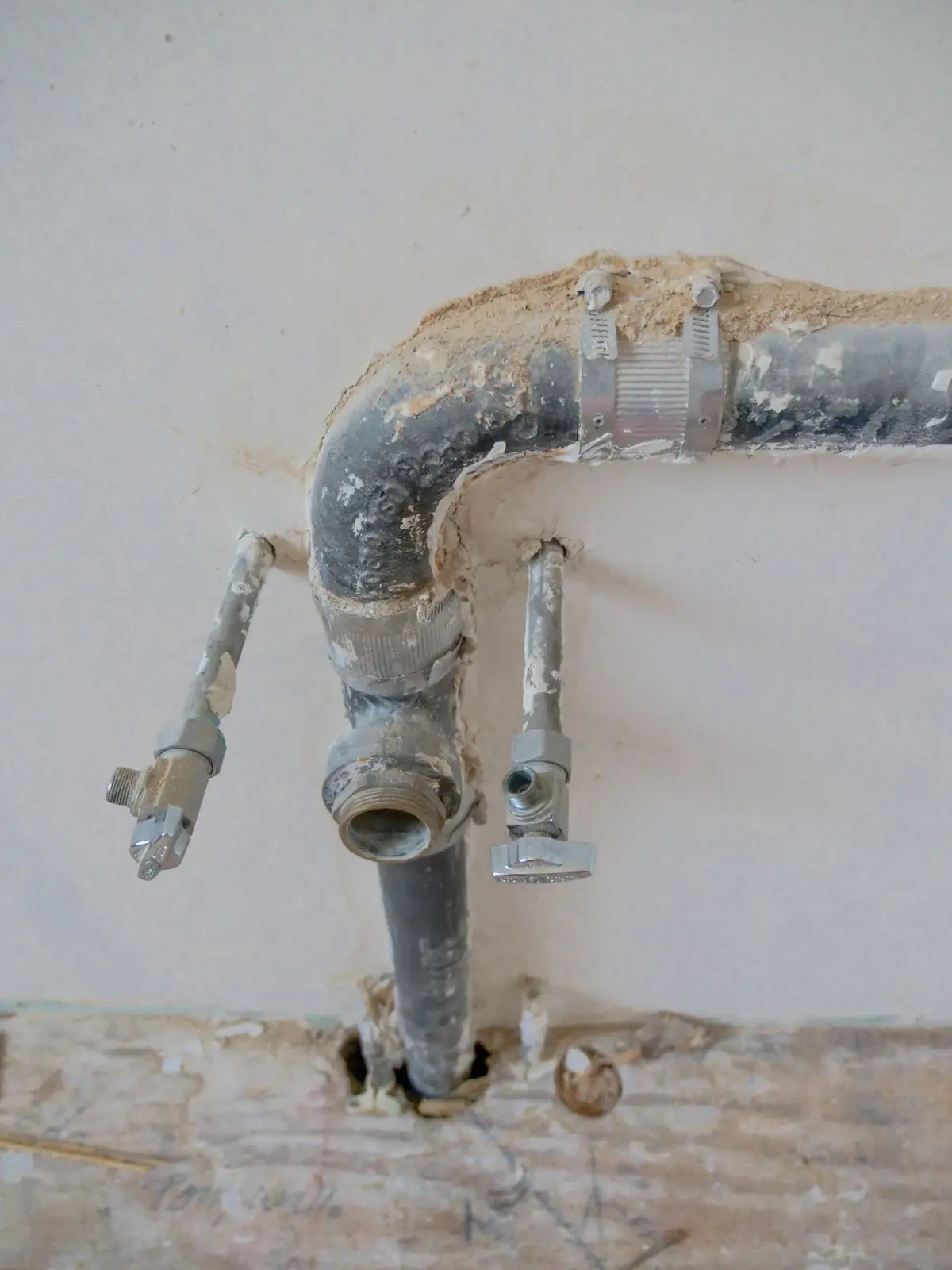
The core descaling tools are rotating chain knockers and carbide-tipped heads carried on a flexible shaft machine. The spinning chains flail against the pipe walls, knocking scale and tuberculation off the iron in flakes while water flushes the debris out of the line.
Head size is matched to the pipe's diameter and remaining condition, and the operator works in passes, heavy crust first, finer finish after, because cast iron that has thinned needs its scale removed without hammering the metal that is left.
Descaling rarely works alone. A hydro jetting pass before descaling clears the soft buildup so the chains meet the scale itself, and a jetting pass afterward washes out the loosened rust and grit the chains knocked free.
The two methods divide the labour honestly: chains and cutters remove what is bonded to the wall, water removes everything merely sitting in the pipe, and together they return an old line to the widest, smoothest bore its remaining iron allows.
No descaling starts blind.
A camera inspection first confirms the pipe is cast iron, maps where the scale is heaviest, and checks for sections where corrosion has gone through the wall, because descaling a perforated section does not restore it and the crew needs to know where those sections are before tools go in.
A second camera pass after the work verifies the restored bore and shows you the before and after on the same screen.
The clearest signals that cast-iron pipe descaling belongs on your list:
Scale announces itself by accumulation, not by event. If your signs describe a line that has been narrowing for years, descaling is the conversation, and the camera footage is where it starts.
Cast iron corrodes from the inside. Wastewater, the gases that form above the waterline and decades of household chemicals attack the iron's inner surface, producing layers of rust scale. In a process called tuberculation, that corrosion grows into rough, barnacle-like mounds that project into the flow.
The bore narrows twice over: corrosion products thicken the wall inward while the effective opening shrinks, and the rough surface traps grease and sediment that a smooth pipe would flush away.
Bradenton's hard water and high water table feed both halves of the process, which is why the city's cast-iron generation is reaching descaling age together.
Descaling is Bradenton's growth trade for a simple demographic reason: the city's biggest building decades, the 1950s and 1960s, plumbed with cast iron, and that iron is all reaching heavy scale age in the same years.
Streets in Bayshore Gardens and Oneco can hold a dozen laterals in near identical condition, which is why local pros read a descaling camera run quickly: they have seen your pipe's exact biography under the house two doors down.
The high water table keeps the outside of these lines wet as well, so the post-descaling verdict, sound, line it, or replace it, is one local crews are practiced at giving straight.
You cannot descale a line yourself, but you can establish whether it belongs on the list. Note whether the slowing is gradual and house-wide, which is scale's signature, rather than sudden and local.
If a previous camera inspection reported scale or showed orange, crusty walls, keep that footage; it is the baseline a descaling quote is built from. Ask any pro quoting replacement whether descaling was ruled out, and why.
And check your home's age and pipe material if you know them: original cast iron from a 1950s or 1960s Bradenton build is the candidate profile, while PVC lines never need descaling at all.
The visit starts with the camera, confirming material, mapping scale and flagging any section too far gone to save. The line is then jetted to clear soft buildup, descaled in passes with the chain equipment, and jetted again to flush the debris out.
The closing camera pass measures the restored bore and documents the iron's true condition along the whole run. You end the visit with footage, a straight reading of how much pipe is left, and a recommendation, monitor, line, or replace, that rests on what the descaled walls actually look like.
Descaling quotes are built from the line's footage, its condition and what the camera found in it. The moving parts are:
| Factor | How It Affects The Job |
|---|---|
| Length of cast iron | Descaling is priced largely by the foot of iron being restored. |
| Scale severity | Light surface scale passes quickly; heavy tuberculation takes repeated passes. |
| Pipe condition | Thinned or fragile iron is worked slowly, with smaller heads and more camera checks. |
| Access | A working cleanout keeps the job direct; work through fixtures or roof vents adds time. |
| Jetting passes | The cleaning passes before and after descaling are part of the full scope. |
| What follows | If the descaled line goes on to lining or a sectional repair, that work is quoted separately. |
Ask for the descaled length in feet and the before and after camera verification in the quote. On restoration work, the footage is the receipt.
Descaling is planned restoration work, not an emergency response. If your line is fully blocked or sewage is backing into the house, that is an <a href="/emergency-drain-cleaning/">emergency clearing</a> first.
Descaling enters the conversation after the line is open and the camera has shown that scale, not collapse, is what has been narrowing it.
Cleaning removes what is in the pipe: plugs, grease, sediment. Descaling removes what has grown on the pipe: the bonded rust scale and tuberculation that are part of the iron itself after decades of corrosion.
A line can be perfectly clean and still badly scaled, which is why a drain can be cleared repeatedly while its capacity keeps shrinking.
Done after a camera inspection, with head size and speed matched to the pipe's condition, descaling removes corrosion products, not sound metal.
The inspection matters because iron that has corroded through cannot be descaled back, and a pro who scopes first will tell you plainly if a section is past saving rather than discovering it with the chains.
Not automatically. Many descaled lines return to service as they are, with a wider, smoother bore and years of life left.
Lining enters the picture when the iron, once the scale is off, shows cracks, joint gaps or thin sections worth sealing, which is exactly what the post-descaling camera pass is for. The decision follows the footage, in that order.
A typical residential lateral is descaled within a single visit once access is established, with the camera work before and after included in that visit. Heavily scaled or longer lines take proportionally more passes. Your quote should state the footage being descaled and the verification steps included.
Descaling resets the bore to what the remaining iron allows, and the scale that took sixty years to build does not return on a short schedule.
The line continues to age, so the honest expectation is years of restored flow, monitored by the footage you keep, rather than a permanent cure for corrosion itself.
Sometimes, and it is worth asking. If the replacement quote was driven by narrowing and slow flow, and the camera shows the iron is scaled but structurally sound, descaling can restore the line at a fraction of replacement scope.
If the iron has perforated or collapsed, no cleaning saves it, and the footage will show that too. Either way, the question deserves a camera answer before a digging answer.
After descaling, keep the before and after footage together in your home file. The comparison is the proof of what was restored, and the after footage becomes the baseline every future inspection measures the line against.
On a sixty-year-old pipe, that record turns the next decade of decisions from guesswork into measurement.
A waterproof camera travels your sewer line so you see the clog, the cracks and the roots yourself before deciding on any fix.
Learn more →Targeted repair of the damaged section of a sewer line: cracked, root-split or separated pipe fixed without replacing the whole run.
Learn more →When the old line is too far gone to repair in sections: a full new lateral from house to street, pitched and sealed to modern standard.
Learn more →Cast-Iron Pipe Descaling is available across Bradenton, including West Bradenton Palma Sola Bayshore Gardens and the rest of the Bradenton neighborhoods where the cast-iron housing stock sits.
Descaling starts where every honest drain decision starts: the homepage explains how jetting and camera work frame the cleaning options before restoration is quoted.
Call now and describe what your drains are doing. A drain professional who serves Bradenton will take it from there: inspect, explain, and quote the fix.
Call (941) 344-0204